The importance of drawing for children
This report is from our 2023 archive. See what the Foundation does now.
Translated from Arabic. Read the original.
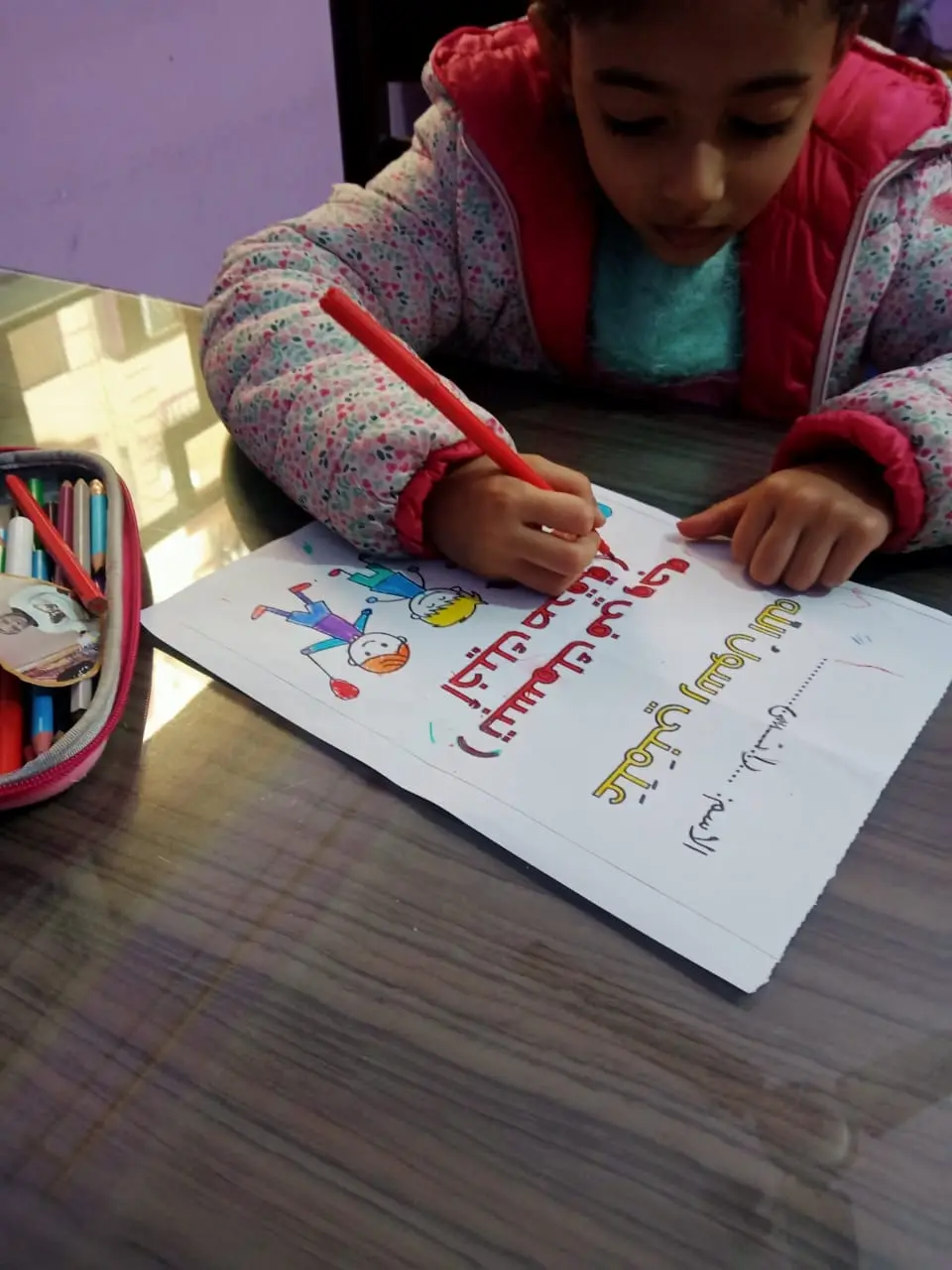
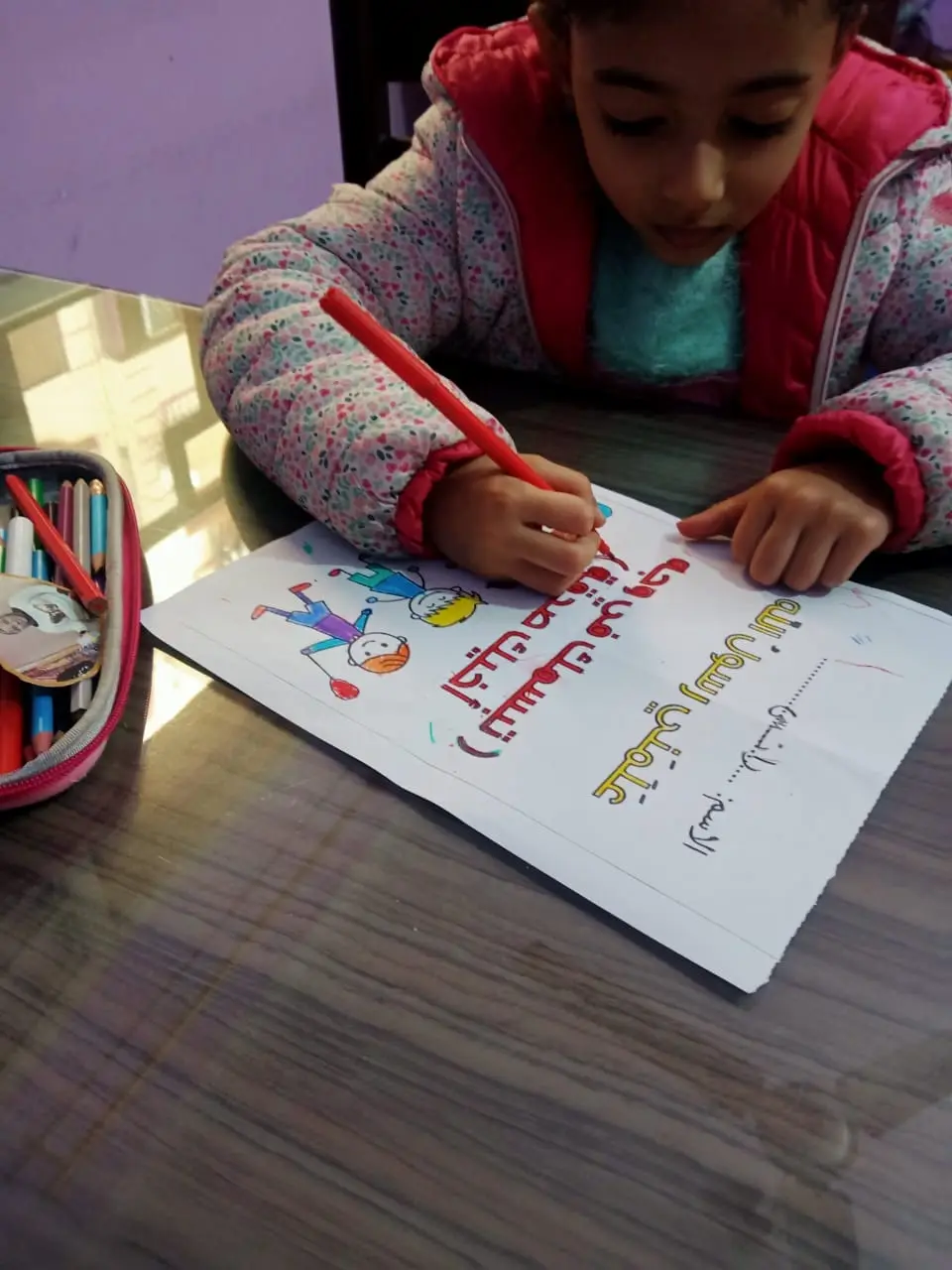
Drawing is one of the finest and most elevated of the arts, a language through which a person expresses what is inside them in the most beautiful colours. It is an art with no single authority: if you look at a picture you may read it one way while someone else reads it another way, and it touches a particular place inside them. Imagine all those wonderful feelings that drawing creates inside your child - and more, for experts have found that drawing matters greatly for children, allowing them to express their thoughts, their dreams and their feelings.
For children, drawing can be a means of amusement and enjoyment that develops their mental skills and nourishes their spirit; at the same time it can be a behavioural and psychological therapy that increases their self-confidence, develops their intelligence, calms them, releases their energy and their negative feelings, and modifies unwanted traits such as irritability and stubbornness.
For a child, drawing is not mere scribbling
Drawing is a means by which a child expresses what is inside them, and they know it instinctively from the earliest stages of growth. All you have to do is give a child paper and a pencil and you will find that they begin at once to make lines of some kind.
Those lines may look to you like mere scribbling, but from the child's point of view they express something. That is why we find that early humans learned to draw before writing and reading, as the Stone Age cave paintings show.
The same is true of the child: drawing is the first skill they use to express themselves, alongside their other means of expression such as play and language.
Through these three means of expression - "language, play and drawing" - the child tries to reach the level of adults and to attract their attention, and we find them expressing what is inside them through drawing.
The parallel stages of language and drawing in children
Researchers have confirmed that a child's developing use of language runs parallel to their learning of the art of drawing, and they have summarised this development in seven steps:
- The line stage: this stage in drawing corresponds to the crying stage in language; in both cases the child makes unintentional movements.
- The scribbling stage: this corresponds to the babbling stage in the child's language learning, and consists of an irregular set of lines that may or may not represent anything to the child.
- The stage of scribbling in colour: this corresponds to the stage of purposeful babbling, in which the child tries to represent things in drawing and to express a love of order.
Note that the child must pass beyond this stage by the age of six, otherwise they will be developmentally delayed.
4 - The symbolic drawing stage: this corresponds to the single-word stage in the child's language learning, where one word stands for a whole sentence.
The child may draw something without any grasp of size or perspective, or draw the part of it that caught their attention; this stage occurs at the age of three or four.
- The social drawing stage: this parallels the stage of a sentence made up of a few words; through their drawing the child can identify and name what they have drawn.
- The transparent house stage: at this stage the child is not concerned with outward appearance; you may notice them drawing a face in profile on a body facing forward. This stage can last up to six years.
- The final stage: here the child takes an interest in everything around them, people and animals alike, and can draw pictures from their imagination of stories they have heard.
The benefits of drawing for children
A way of expressing their needs and their inner feelings.
Those around the child can discover the secrets of their personality and their mind through the drawings they make.
Drawing is one of the best ways of releasing a child's negative charges and energies.
Drawing also builds a child's skills and develops their imagination.
Through drawing a child can overcome shyness, and drawing increases a child's self-confidence.
Drawing increases their sense of taste and beauty.
Through drawings, many noble values and principles can be instilled in a child's psyche.
Through drawing it is possible to identify the network of social relationships in which the child lives, and the people who influence their life.
Specifically, to learn how close the child is to particular people, and how much they like or dislike them.
To identify a child's strengths and weaknesses.