
Head of the National Authority for Quality Assurance and Accreditation of Education to Youm7: five years before citizens feel education improving; a one-year extension for unaccredited schools under study; budget cut after the revolution
This report is from our 2018 archive. See what the Foundation does now.
Translated from Arabic. Read the original.
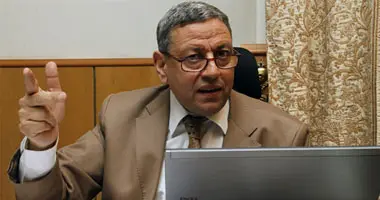
Head of the National Authority for Quality Assurance and Accreditation of Education to ”Youm7”: We need five years before citizens feel education improving.. We are studying a one-year extension for unaccredited schools.. And our budget fell after the revolution
Dr Magdy Qasem, Chairman of the National Authority for Quality Assurance and Accreditation of Education, which reports to the Cabinet, disclosed that the state intends to extend by a further year the deadline for public and private schools to obtain the “quality and accreditation” certificate. In his interview with “Youm7”, Qasem explained that the Authority will not close schools that have failed to apply for accreditation or failed to obtain “quality” status; instead it will impose other penalties on them.
Qasem described Egypt's present circumstances, difficult as they are, as a golden opportunity for radical change in education. He pointed to what he called the state's lack of a clear plan for developing education over past decades, and predicted that teachers and parents would feel education improving in accredited schools and faculties five years after an institution is accredited by the Authority. The full interview follows.
- Many teachers and parents regard the education quality and school accreditation system as “ink on paper” and a luxury of no use to schools. What is your response?
- Whoever is ignorant of something automatically becomes its enemy. A school that has obtained quality accreditation is a school able to identify and solve its own problems; a school without it is not.
- When will teachers and parents see the effect of the “quality system” on education in accredited schools?
- After five years, provided they keep meeting the quality standards.
– The quality law provides for penalties on schools that fail to apply to the Authority within the first five years of the system. Three years have now passed and only about 3,000 schools out of 45,000 have applied. What is to be done?
- We will give schools that have not applied for quality accreditation a grace period of up to a year after the five-year deadline set by law expires. I expect 50% of our schools to have applied to the Authority by 2013, because we are moving towards an electronic application system that will save time. I consider that a reasonable proportion.
- And what of the schools that do not apply, or that fail accreditation?
- We will not close them. We will impose two graduated penalties: first, barring them from admitting new intakes; second, replacing the school's management.
- What does the Authority need from the Ministers of Education and of Higher Education?
- We need closer coordination with us on accrediting schools and universities, and we need both ministries to notify educational institutions that they must submit accreditation applications.
- What is the Authority's budget for the current financial year compared with last year?
- EGP 35 million, down by between 10% and 15% because of the economic conditions Egypt is going through. The state discussed the cut with us beforehand and gave the country's circumstances as the reason, so we understood it; but we hope the budget will rise next year, because quality in education is not optional.
- How do you view the state's plan to create a chain of schools for students gifted in science and technology?
- An excellent plan. If the first of these schools for high achievers applies to the quality authority, we will follow our normal procedures, and I expect it to be accredited, because it is a strong school serving high achievers. I do believe, though, that this must run alongside a plan to support students who are falling behind academically.
– When will the state finish drawing up a national qualifications framework that allows graduates to continue their education and obtain certificates, and allows students to change track?
– The Authority has already prepared a national framework and will shortly complete its review of the National Qualifications Framework; its peer review will finish by the end of November. A ministerial committee under the previous government approved its structure a year ago. Applying it will require amendments to some laws. Once in force, it will allow a graduate to change specialisation after graduation by entering another type of education, or to leave education and return to it later.
– How did the handling of “education quality” differ between the Nazif government and the Sharaf government?
- I think the present government has a better grasp of why quality in education matters, not because the previous government was bad, but because the current Prime Minister and the Minister of Education both worked with the Authority as quality experts in recent years, after leaving the Nazif government. Dr Amr Ezzat Salama, the former Minister of Higher Education, was with them too.
- Have you met Dr Essam Sharaf during this transitional period?
- Yes, once. He is aware of what was happening at the Authority before the 25 January revolution. At that meeting I asked him to allocate a separate building to the Authority, which has had no permanent premises since it was established in 2007 and temporarily occupies the National Telecommunication Institute building in Nasr City, where we are sitting now. The Prime Minister promised us premises.
- What prevented education quality from being applied in Egypt over past decades?
- Egypt has soft power in its large number of teachers and their deep store of experience in education; they are the ones who taught the Arab region. Our real problem is that those responsible for education in recent decades set no objectives for the educational process, and so we never reaped its outcomes, unlike India and Pakistan, two countries whose economies are in difficulty.
- On the subject of abroad: what is the main obstacle to benefiting from our scientists overseas?
- A shortage of government funding. Some of these scientists work in very advanced industries in the United States and Canada, in rare specialisations at highly prestigious institutions. The government plan to draw on them, which the Authority drafted, was therefore built on linking them to the education and industry sectors in Egypt without requiring them to return to Egypt permanently. I believe their involvement would have built international confidence in our domestic education system.
- How do we develop education in Egypt?
- In my view, developing education requires three elements: first, a plan with defined objectives for reaching better educational outcomes; second, greater financial support; third, engagement between society, “parents and institutions”, and the government. I repeat that our experience in education will help us develop it once these elements are in place.
- Does the political transition affect education reform?
- Some may take a pessimistic view of the turbulence surrounding the political transition. For my part, I believe what we are going through is a golden opportunity for qualitative change in how the education system is run, because many obstacles have fallen away, which is not achievable in normal circumstances. After the revolution, change in Egyptian education can move smoothly and in a way that serves the revolution's goals, social justice above all. I believe the current or the next government should be given the chance to deliver that change, because everything happening now is normal. We have before us an opportunity to reshape the state that arises only once every few centuries in the history of nations, if those in authority manage systematic change well.
- How do you assess the Authority's performance from the start of its work in 2008 until now?
- “Quality and Accreditation” is the first body in Egypt built to monitor the performance of a specific sector. We are not perfect, but we are trying to make the experiment work, and we have already come some way in awarding quality certificates to educational institutions.
About the Authority:
- The Authority's teams made 3,046 school visits over the past three years.
- The Authority has awarded “quality and accreditation” certificates to 1,496 schools, deferred accreditation for 656, warned 19 that their certificate may be withdrawn, and refused accreditation to 785.
- The Authority has signed 16 agreements with international accreditation bodies.